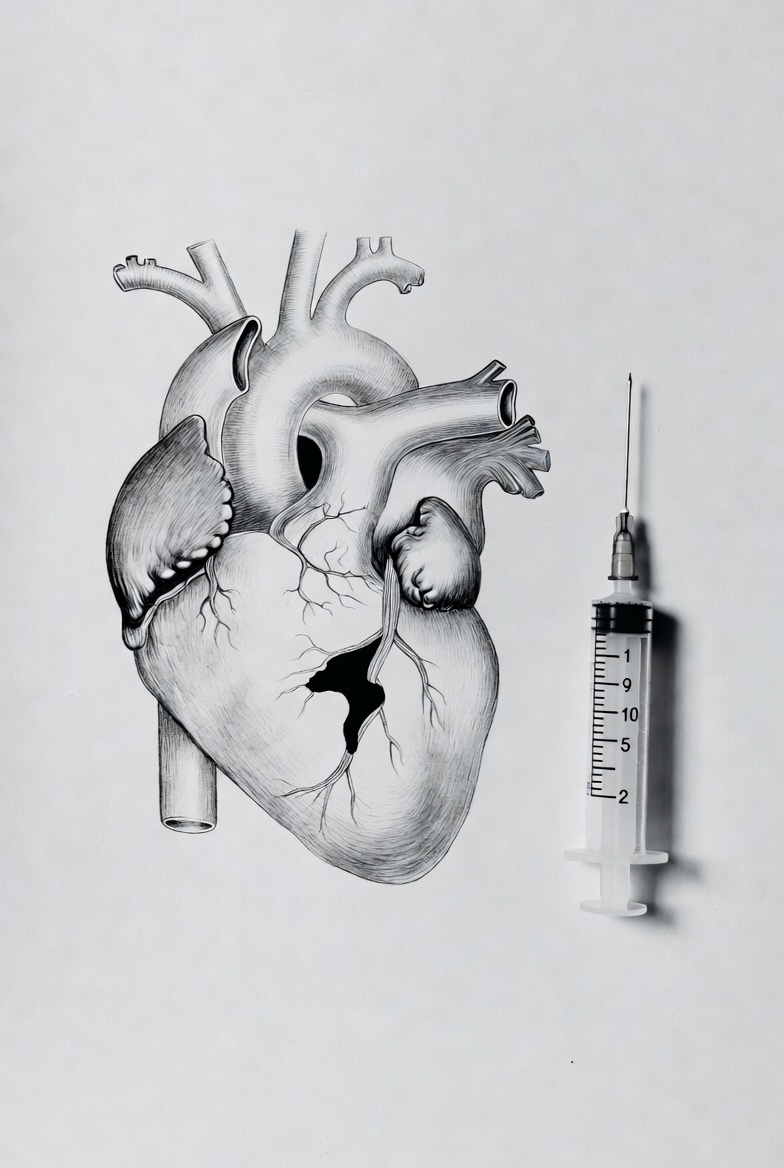
Summary
- A large registry-based cohort study found that babies born to mothers vaccinated against COVID-19 before 12 weeks of gestation had a higher rate of atrioventricular septal defects (holes in the heart) — 2.3% compared to 0% in babies of unvaccinated mothers.
- The same study also showed a slightly higher rate of cleft palate in the early-vaccinated group.
- The findings contradict official public health messaging that mRNA COVID vaccines are safe in early pregnancy and raise serious questions about why such signals were not more aggressively investigated or communicated to pregnant women.
What Happened
A registry-based cohort study examined ultrasound-detected congenital anomalies in pregnancies where mothers received at least one dose of COVID-19 vaccine before 12 weeks of gestation compared to those vaccinated later or not at all.
Researchers found that atrioventricular septal defects (a serious heart defect involving holes between the heart chambers) occurred more frequently in the early-vaccination group. Cleft palate also showed a modest increase. Most other anomalies did not show clinically meaningful differences, but the specific signals for these two defects stood out in the data.
The study adds to a body of research on potential fetal effects of mRNA vaccines administered during the critical period of organogenesis (the first trimester), when the heart and face are forming.
Why It Matters
Pregnant women were strongly encouraged and in some cases pressure to get COVID-19 vaccines, including during the first trimester, despite limited long-term safety data at the time. If early vaccination is associated with even a small increase in serious birth defects like holes in the heart, it represents a significant public health failure.
Many women who followed official guidance and got vaccinated early in pregnancy may now be facing the consequences for their children. The lack of transparent communication about these risks at the time undermines informed consent and trust in health institutions.
The Bigger Picture
This study fits into a larger pattern of emerging safety signals around COVID-19 vaccines in pregnancy that official agencies have been slow to acknowledge or act upon. While some studies have found no overall increase in major birth defects, specific signals like increased atrioventricular septal defects in early-vaccinated pregnancies deserve serious attention rather than dismissal.
The broader issue is the aggressive promotion of mRNA vaccines to pregnant women with incomplete safety data, combined with institutional resistance to acknowledging potential harms. When studies show concerning signals in the most vulnerable population (unborn children), the response should be immediate further investigation and updated guidance — not continued insistence that everything is fine. The fact that this particular finding has not received widespread mainstream attention reinforces perceptions that inconvenient data is being sidelined.
Sources
Registry-based cohort study on COVID-19 vaccination before 12 weeks and congenital anomalies (2026): https://pmc.ncbi.nlm.nih.gov/articles/PMC13269975/
- Vance Says Task Force Found About $280 Billion in Federal Benefit Fraud, Including Phantom Health Enrollees
- Canada’s Government-Run Death Program Killed More People in 2024 Than U.S. Gun Homicides
- USDA FOIA File on Merck RNA Pet Vaccine Lists Deaths and Collapse Within Hours of the Shot
- Education Department Probes Massachusetts School That Hid a Girl’s Social Transition From Her Parents
- Spain’s Ceuta Border Crisis Sparks Nationwide Protests and Questions Over Morocco’s Role

