Summary
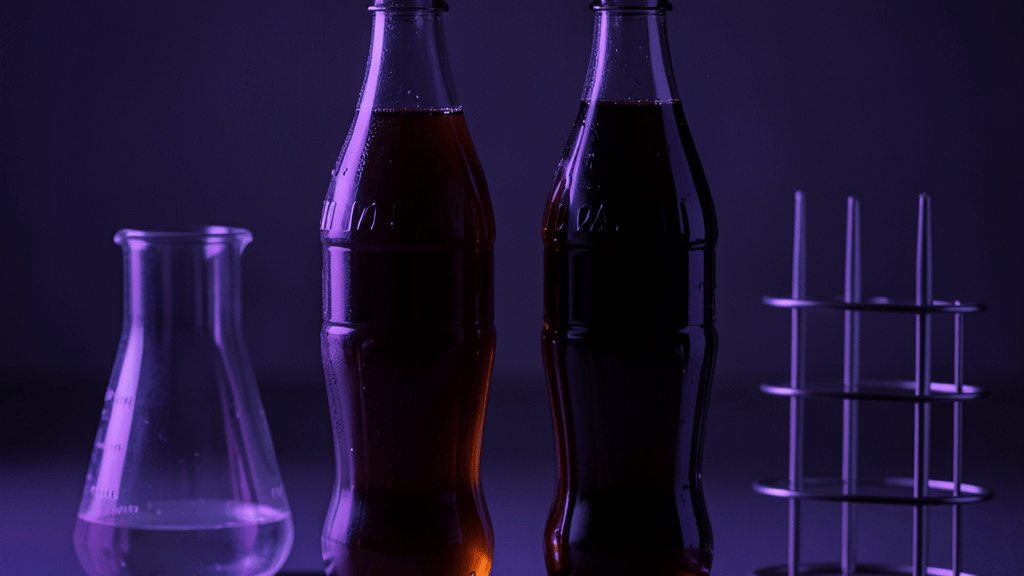
- Researchers isolated fluorescent nanoparticles from Coca-Cola and Pepsi and observed their distribution in mice, including the brain.
- Their ability to enter cells and reach mouse brain tissue raises exposure questions that short-term toxicity tests cannot settle.
- Gates-funded diagnostic research and a substantial bottler investment are documented separately from the beverage experiments.
What carbon nanodots are and where they come from
Carbon nanodots are extremely small carbon-based particles that emit light when excited by a suitable light source. Researchers isolated particles about five nanometers across from Coca-Cola and Pepsi: roughly five billionths of a meter. These are molecular-scale carbon structures, not miniature electronic devices.
Shen Li and colleagues reported the findings online in December 2017 and in Nanotoxicology in February 2018. The cola particles contained carbon, hydrogen and oxygen. Foodborne carbon dots can form during heating and chemical reactions between food ingredients; detecting them does not establish that a manufacturer deliberately added engineered nanoparticles.
Mice given a single dose of two grams per kilogram appeared healthy. Researchers observed no obvious organ damage or apparent tissue abnormalities. Some biochemical measurements differed statistically without showing biologically significant changes.
Those acute findings concern a defined experiment. They do not establish long-term human effects from drinking commercial cola, and the study did not identify a deliberate nanoparticle-addition program.
Why tissue penetration and exposure gaps raise concern
A later scientific review, Endogenous Fluorescence Carbon Dots Derived from Food Items, placed the cola findings alongside research on particles isolated from coffee, beer, cooked chicken and other foods. Carbon dots occur across food-processing research, rather than being unique to these two brands.
The concern is biological exposure: the cola particles entered living cells, and mouse experiments found that they crossed the blood-brain barrier, which normally restricts substances entering the brain. Their small size allows interactions with cells and tissues that warrant investigation. Reaching an organ, however, is not the same as demonstrating injury to it.
Digestion can change the material being measured. Simulated digestion reduced fluorescence from the cola particles, indicating structural changes whose mechanisms required further study. The review discussed differences between toxicity observed in cell experiments and results in living animals, where digestion intervenes.
The unresolved issue is what repeated, long-term dietary exposure does at amounts people actually consume. A single-dose mouse experiment cannot answer that question or establish a human risk threshold. The review identifies limited knowledge of foodborne particles’ behavior after ingestion, supporting further study rather than a conclusion that ordinary cola consumption causes brain damage.
A mosquito-detection grant and a bottler holding
The Gates Foundation separately funded research involving graphene quantum dots. A 2016 ACS Applied Materials & Interfaces paper acknowledged grant OPP1128411 while describing a sensor for specific microRNA sequences.
The foundation’s grant record identifies a $100,000 commitment to Complutense University of Madrid in April 2015. Its stated purpose was a portable light-based device to identify pathogen-carrying mosquitoes, including those infected with dengue, through microRNA detection. The record describes diagnostic development, not beverage manufacturing.
An investment connection also exists. Dataroma’s holdings history lists 6,214,719 Coca-Cola FEMSA shares in the Bill & Melinda Gates Foundation Trust’s portfolio for the second quarter of 2026, representing 1.92% of that portfolio. The same share count appears across many earlier quarters.
Neither that investment record nor the diagnostic grant establishes that the foundation engineered particles for cola. The beverage paper’s disclosed funding instead identifies China’s National Key Research and Development Program, and its authors reported no potential conflict of interest.
Related Reading
- Nanotoxicology: Cola nanoparticle experiment
- Review: Endogenous carbon dots in food
- ACS: MicroRNA sensor study and funding
- Gates Foundation: Mosquito-detection grant
- Dataroma: Trust’s Coca-Cola FEMSA holdings
- Under The Fold: Vaccine-safety litigation and financial-conflict allegations
- Under The Fold: Dr. Oz investigates Medicaid funding flows

