Key Takeaways
- Tens of thousands of people demonstrated across Spain on September 2 over the government’s handling of the Ceuta border crisis.
- A mass crossing from Morocco on July 30 and 31 brought an estimated 50,000 to 60,000 people into the small Spanish enclave, although most later returned or were transferred.
- Declassified records show Spain’s intelligence service warned domestic and Moroccan authorities about social-media plans for a mass crossing before the breach.
- The demonstrations included demands for stronger border control, but the viral claim that all participants supported closing Spain’s borders is broader than the reporting supports.
What Happened
Tens of thousands of Spaniards joined demonstrations on September 2 demanding answers over the government’s handling of a deadly mass crossing into Ceuta, Spain’s small North African enclave bordering Morocco.
The protests followed weeks of overcrowding, emergency shelter construction, political conflict, and tense encounters among residents, migrants, police, and aid workers. Demonstrators criticized Prime Minister Pedro Sánchez and called for stronger border security and relief for Ceuta.
Spanish public broadcaster RTVE described tens of thousands gathering across the country in solidarity with Ceuta. Local coverage showed a mixture of border-security demands, criticism of the central government’s response, concern about humanitarian conditions, and broader partisan opposition to Sánchez.
The July Crossing Transformed Ceuta
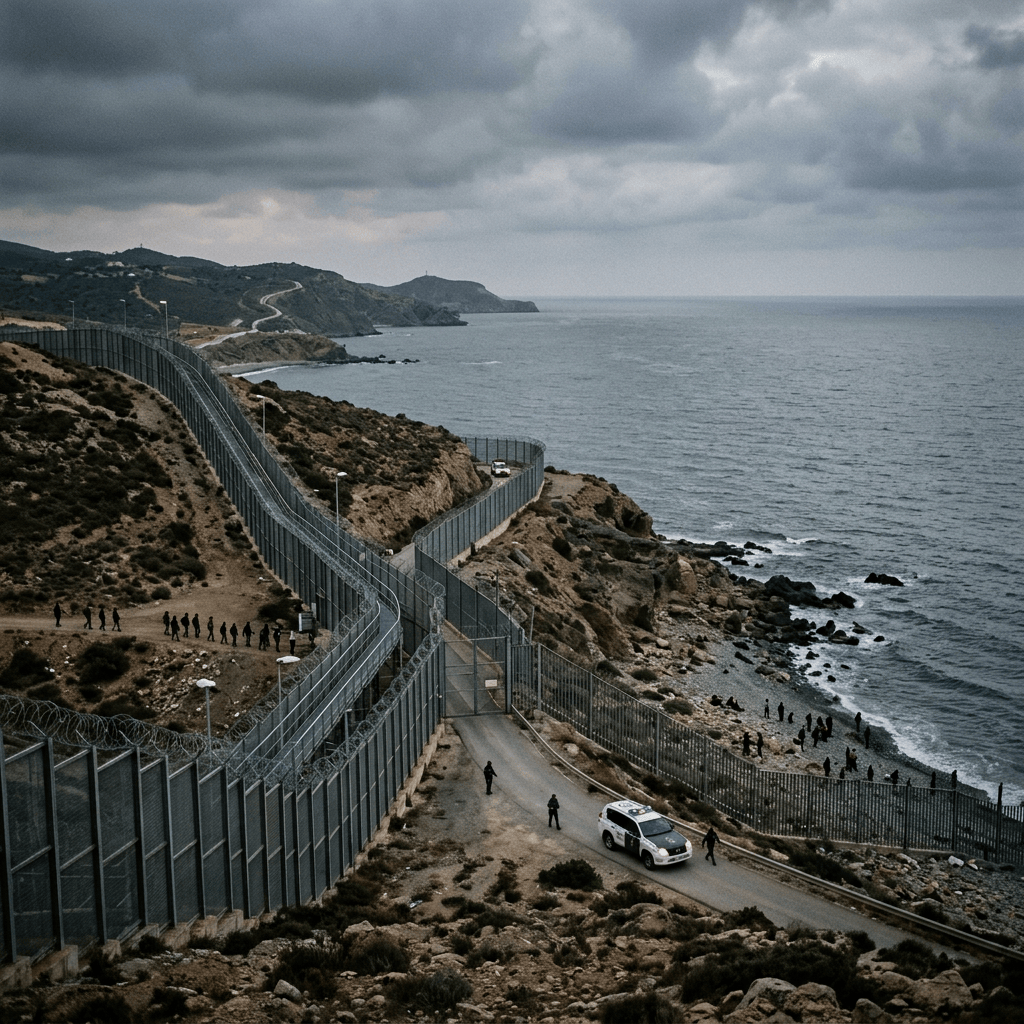
On July 30 and 31, approximately 50,000 to 60,000 people crossed from Morocco into Ceuta by climbing fences, passing through border areas, or swimming around coastal barriers. The influx increased the enclave’s population by more than half in a matter of hours.
Most arrivals were young men. Spanish authorities, emergency workers, and residents struggled to provide food, shelter, sanitation, and medical care. Many migrants later returned to Morocco or were transferred, but thousands remained in temporary facilities and makeshift camps weeks later.
The crossing was also deadly. Sánchez told lawmakers on September 3 that 141 people died, revising upward an earlier combined estimate of 96 deaths issued by authorities in Ceuta and Morocco’s National Human Rights Council. Search operations and identification efforts continued.
Warnings Before the Breach
Declassified documents released by Spain’s government show that the National Intelligence Center issued warnings before the crossing. The agency monitored social-media groups promoting a mass attempt to enter Ceuta on July 30 by land and sea.
The intelligence service notified Spain’s government delegation in Ceuta and the Civil Guard. It also warned Moroccan intelligence counterparts. The existence of those notices has intensified questions about why authorities did not prevent the breach or deploy adequate resources in time.
The records do not by themselves establish that Morocco organized the crossing. Spanish lawmakers have pressed Sánchez over whether Moroccan authorities failed to act, encouraged departures, or lost control. Morocco’s conduct is especially sensitive because cooperation between Madrid and Rabat is central to controlling the enclaves’ borders.
The government says it is reviewing the response and working with Morocco. Opposition parties argue that Sánchez has not provided a clear timeline or accepted responsibility for the failure.
Protests in Ceuta Turned Confrontational
Ceuta residents held repeated demonstrations during August. Some were peaceful gatherings demanding security, assistance, and a return to normal life. Others escalated into clashes with police and efforts to dismantle migrant camps or block Red Cross aid.
Video from August 27 showed protesters burning or destroying camp materials near a beach while officers separated residents and migrants. Local organizers later suspended some demonstrations out of concern that far-right groups would exploit them or that further violence would follow.
Those incidents show why national coverage cannot be reduced to a simple choice between border enforcement and indifference. Ceuta residents faced exceptional pressure, while migrants experienced dangerous conditions, hostility, and uncertainty over asylum or return.
Spanish authorities have obligations under domestic and European law to control the border, rescue people in danger, process protection claims, and prevent collective violence.
Why It Matters
Ceuta is Spanish and therefore part of the European Union, even though it sits on the North African coast. Its land border with Morocco is one of the EU’s most politically sensitive external boundaries.
A sudden breach can strain a city far more severely than the same number of arrivals distributed across a larger territory. Housing, schools, health services, policing, and waste systems in Ceuta were not designed for an overnight population increase of this magnitude.
The crisis also exposes the risks of migration being used as geopolitical pressure. Spain depends on Moroccan enforcement, while Morocco can use cooperation as leverage in disputes over trade, visas, Western Sahara, and diplomatic recognition.
For the Sánchez government, the issue combines operational failure with political vulnerability. The opposition can point to documented warnings and visible disorder. The government must explain its decisions without inflaming hostility toward migrants or making unsupported accusations against Morocco.
The Bigger Picture
Spain has generally supported legal migration while tightening enforcement against irregular routes. The country faces arrivals through the Canary Islands, the western Mediterranean, and its land borders at Ceuta and Melilla.
European border law has also constrained immediate returns. A June court ruling limited Spain’s ability to summarily return migrants intercepted at sea near the enclaves, adding legal complexity during a fast-moving mass crossing.
Public opinion is not uniform. Some Spaniards want much stronger restrictions and support right-wing parties. Others demand more European assistance, quicker asylum decisions, legal migration channels, or greater humanitarian protection. The September protests included overlapping versions of those concerns.
The evidence supports a serious national backlash against the government’s Ceuta response. It does not support treating tens of thousands of demonstrators as a single ideological bloc or interpreting every Spanish flag as an endorsement of closing all borders.
The immediate accountability questions are concrete: what officials knew before July 30, what Morocco did after receiving warnings, why defenses failed, how many people died, and how Spain will restore normal conditions while meeting its legal obligations.
Related Reading
RTVE — Tens of thousands rally across Spain in solidarity with Ceuta
RTVE — Ceuta residents demand solutions to the migration crisis
Spanish government — Prime minister’s parliamentary statements on Ceuta
Related Reporting
Associated Press — Sánchez questioned over the Ceuta border crisis
Associated Press — Declassified files reveal warnings before the breach

